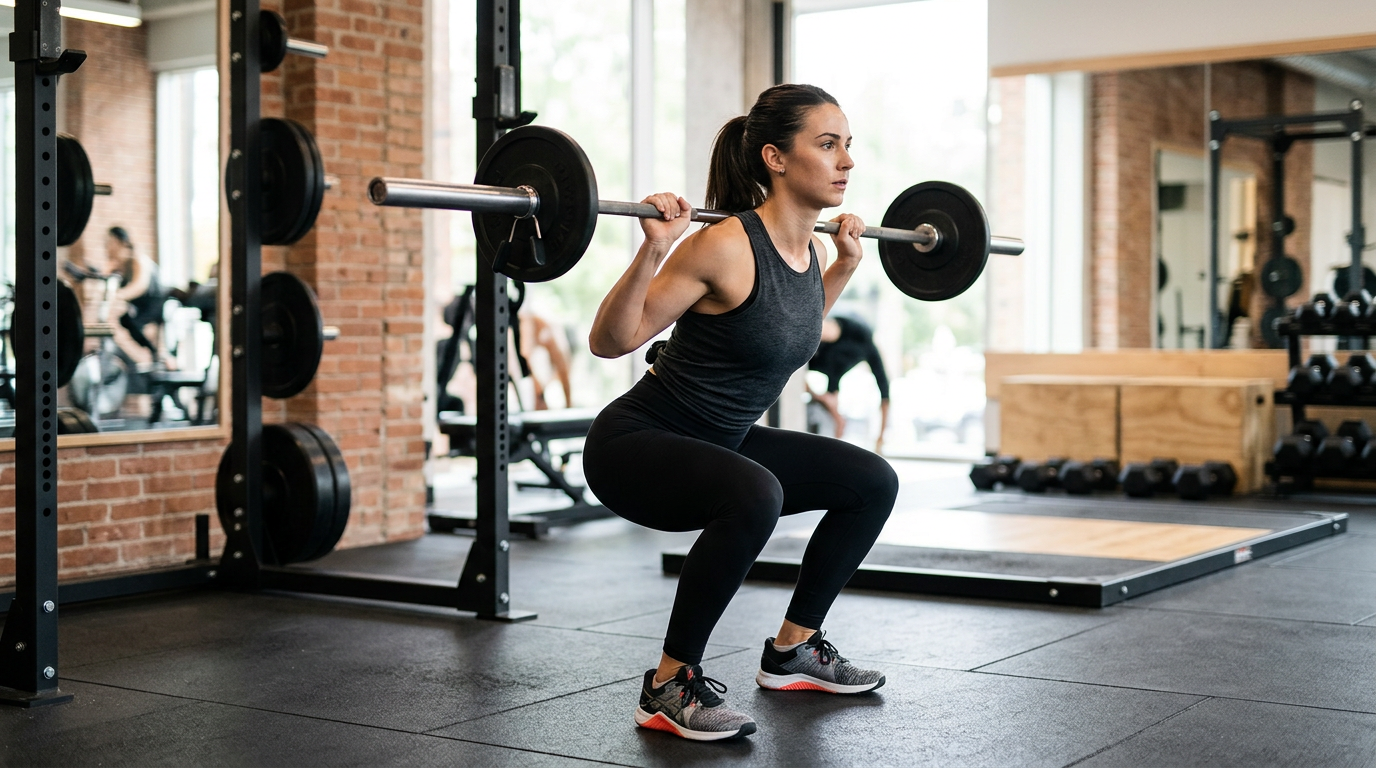
Postural alignment represents one of the most underappreciated variables in exercise performance, yet it serves as the foundation upon which all movement quality rests. When your spine, shoulders, hips, and knees exist in optimal alignment, your muscles can generate force more efficiently, your joints experience reduced stress, and your nervous system can coordinate movement patterns with greater precision. Think of your body as a structural building—if the foundation isn’t level, everything constructed above it becomes compromised. Similarly, poor posture during exercise creates compensatory movement patterns that distribute load unevenly across joints and muscles. This misalignment not only reduces your exercise effectiveness but also increases injury risk significantly. Understanding how postural alignment influences performance allows you to train smarter, recover faster, and build a stronger physique over time. The science is clear: investing time in postural awareness yields exponential returns in both strength gains and injury prevention.
The biomechanics of proper alignment reveal why positioning matters so profoundly for exercise outcomes. When your joints stack vertically and your muscles maintain neutral tension, force transmission becomes linear and efficient. During a squat, for example, proper alignment means your knees track over your toes, your chest remains upright, and your weight distributes evenly through your midfoot. This positioning allows your quadriceps, glutes, and core to work synergistically rather than fighting against mechanical disadvantages. Research in exercise science demonstrates that athletes with superior postural control exhibit greater strength gains and improved movement economy. Your nervous system responds to proper alignment by recruiting muscle fibers more effectively and reducing unnecessary stabilizer muscle activation. When alignment deteriorates, your body must compensate by recruiting additional muscles just to maintain stability, which wastes energy and diverts resources from generating power. This inefficiency explains why two people performing identical exercises can experience vastly different results—one working with their biomechanics, the other against them.
Spinal alignment deserves particular attention because your spine represents your body’s central structural column and the pathway for your nervous system. Maintaining a neutral spine during exercise ensures that intervertebral discs remain properly positioned and that loads distribute evenly across vertebral bodies. When your spine curves excessively into flexion or extension, you create focal stress points that accumulate damage over time. During pressing movements like bench press or overhead press, a neutral spine allows your core muscles to stabilize effectively while your chest and shoulders generate force. During pulling movements, spinal alignment prevents excessive rounding that compromises shoulder mechanics and creates impingement. The lumbar spine, in particular, requires careful attention during loaded exercises because excessive anterior or posterior pelvic tilt shifts stress away from your core muscles onto passive structures like ligaments and discs. By maintaining awareness of your spinal position throughout each repetition, you create a protective mechanism that preserves joint health while maximizing strength development. This conscious attention to alignment gradually becomes automatic through consistent practice.
Shoulder positioning dramatically influences upper body exercise performance and long-term shoulder health. Proper scapular alignment means your shoulder blades sit flat against your rib cage with your shoulders packed slightly back and down. This positioning creates a stable platform from which your arms can generate force and protects your rotator cuff muscles from impingement. During pressing exercises, maintaining scapular stability prevents your shoulders from shrugging upward and allows your chest muscles to generate maximum force. During pulling exercises, proper scapular positioning ensures your lats engage fully rather than allowing your traps to dominate the movement. Many lifters experience shoulder pain not because they’re inherently injured but because their scapulae position poorly during exercise. This misalignment creates subtle impingement that accumulates into chronic discomfort. By consciously retracting and depressing your scapulae before each set, you immediately improve exercise quality and reduce injury risk. The shoulder complex involves numerous small muscles and joints, making alignment particularly crucial for maintaining function across your lifespan.
Hip alignment and pelvic positioning create the foundation for lower body power and core stability. When your pelvis tilts anteriorly or posteriorly excessively, you compromise both your lower back and your ability to generate force from your lower extremities. Proper alignment means your hips sit directly over your knees, which sit directly over your ankles—creating a vertical line that distributes load efficiently. During squatting movements, this alignment allows your glutes to activate maximally and your knees to track safely. During deadlifting, proper hip positioning ensures your hamstrings engage fully and your spine remains protected. Many people struggle with lower back pain during leg training because their pelvis tilts anteriorly, creating excessive lumbar extension. This compensation pattern shifts stress away from the muscles designed to handle load and onto passive spinal structures. By maintaining neutral pelvic positioning and engaging your core before lifting, you immediately reduce discomfort and improve strength expression. The relationship between hip alignment and core function cannot be overstated—your core cannot stabilize effectively if your pelvis doesn’t position correctly.
Practical strategies for improving postural alignment during exercise begin with awareness and progress toward automatic execution. Before each set, take a moment to mentally scan your body from head to toe, deliberately positioning each major joint. For upper body exercises, pack your shoulders, engage your core, and maintain a neutral spine. For lower body exercises, ensure your pelvis remains neutral, your knees track over your toes, and your weight distributes through your entire foot. Video recording your sets provides invaluable feedback because most people cannot accurately perceive their own alignment without external reference. Mirror training offers another effective tool, though it shouldn’t become a permanent crutch. Working with a qualified coach or trainer accelerates alignment improvement significantly because they can identify subtle positioning errors you might miss. Mobility work and targeted stretching address tightness that restricts proper alignment—tight hip flexors, for example, make neutral pelvic positioning difficult. Consistency matters tremendously because postural habits develop through repetition, and improvement requires patience and deliberate practice.
The relationship between postural alignment and injury prevention extends beyond immediate exercise performance into long-term musculoskeletal health. Poor alignment during training creates repetitive stress that accumulates into chronic injuries over months and years. Shoulder impingement, lower back pain, knee discomfort, and elbow tendinitis often stem from subtle alignment issues that compound through thousands of repetitions. By maintaining proper alignment, you distribute stress across multiple structures rather than concentrating it on vulnerable areas. This distribution allows tissues to recover and adapt rather than becoming progressively damaged. Research demonstrates that athletes with superior postural control experience fewer injuries despite training with similar volume and intensity as those with poor alignment. The preventive value of proper alignment represents perhaps its greatest benefit because avoiding injury is infinitely preferable to treating it. Additionally, proper alignment during exercise sessions often translates into improved posture during daily activities, creating a positive cascade effect throughout your entire life.
Integrating postural alignment into your training philosophy represents a paradigm shift from simply moving weight to moving with purpose and precision. This approach recognizes that exercise quality supersedes quantity—one properly executed repetition provides more benefit than multiple sloppy repetitions. As you develop greater body awareness and postural control, you’ll notice improvements extending far beyond the gym. Your daily posture improves, your energy levels increase, and chronic discomfort often diminishes. The investment in alignment pays dividends across every aspect of physical performance, from athletic endeavors to occupational demands. Moving forward, approach each training session with intention toward perfect positioning before adding load or volume. Your future self will appreciate the protection and performance enhancement that proper alignment provides. Remember that postural mastery develops gradually through consistent practice and mindful attention, but the compounding benefits make this investment among the highest-return decisions you can make for your long-term fitness success.