“`html
Isometric exercises represent one of the most underutilized yet scientifically proven methods for building functional strength and stability. Unlike dynamic movements where muscles lengthen and shorten through a range of motion, isometric contractions involve holding a fixed position against resistance without any movement. This static nature makes isometric training uniquely effective for developing neural adaptations and muscular endurance in ways that complement traditional strength training. The beauty of isometric work lies in its accessibility—you can perform these exercises virtually anywhere, requiring minimal equipment while delivering maximum results. From athletes seeking competitive advantages to fitness enthusiasts aiming for injury prevention, isometric training offers something valuable for everyone. The science behind these exercises reveals that they activate muscle fibers intensely while placing less stress on joints compared to dynamic movements, making them particularly beneficial for those recovering from injuries or managing chronic pain conditions.
The physiological mechanisms underlying isometric exercise effectiveness are rooted in how muscles respond to sustained tension. When you hold a position against resistance, your nervous system recruits motor units to maintain tension, creating what exercise scientists call “time under tension.” This prolonged activation stimulates both Type I and Type II muscle fibers, though the recruitment pattern differs from traditional weightlifting. Research demonstrates that isometric holds trigger significant metabolic stress, a key driver of muscle growth and adaptation. Additionally, isometric contractions generate substantial force production without the joint stress associated with dynamic movements, as there’s no acceleration or deceleration phase. This makes isometric training particularly valuable for building stability around joints, strengthening connective tissues, and improving proprioception. The sustained muscle contraction also enhances blood flow and oxygen utilization, contributing to improved muscular endurance and resilience during demanding physical activities.
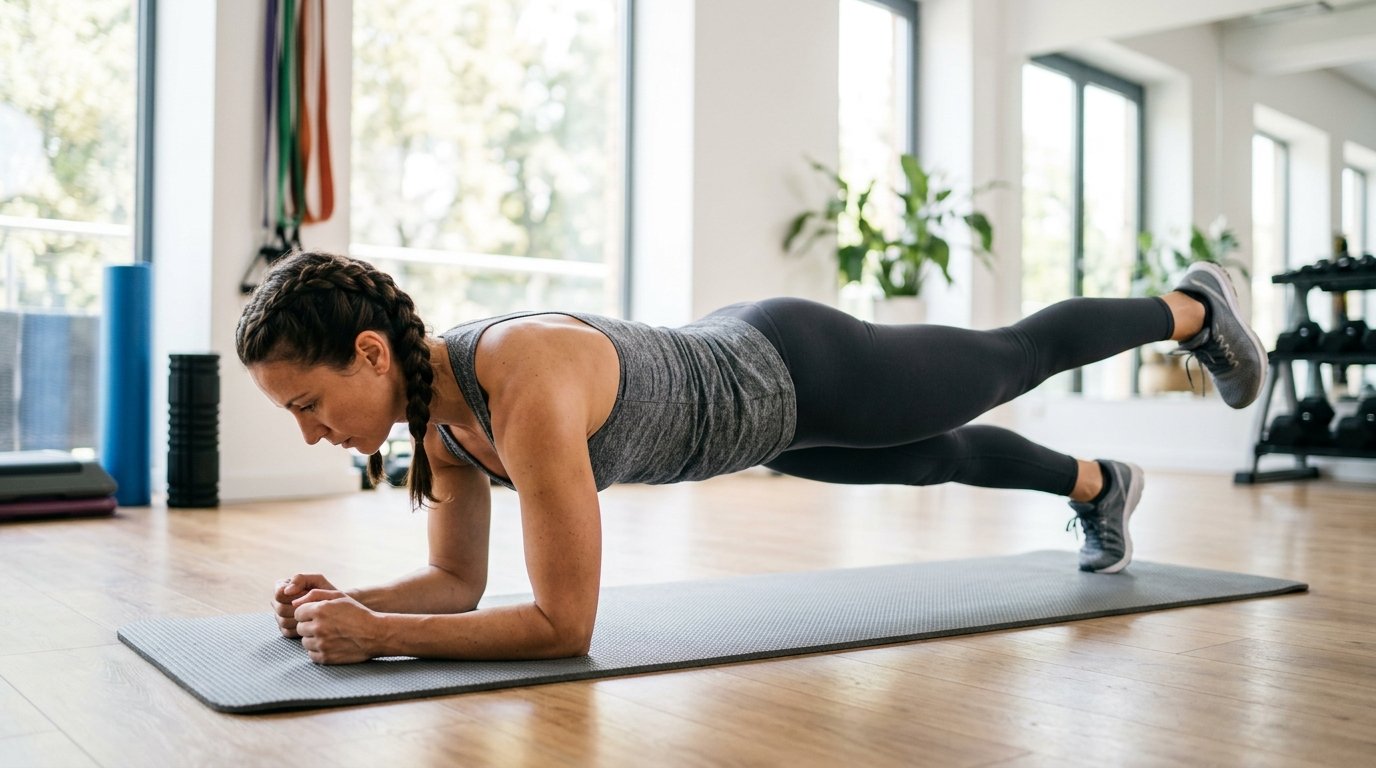
Planks stand as perhaps the most recognizable isometric exercise, and their popularity is well-deserved given their comprehensive benefits. A proper plank position engages the core stabilizers, including the rectus abdominis, transverse abdominis, and erector spinae, while also recruiting shoulder and leg musculature. The beauty of planks lies in their scalability—beginners can perform modified versions on their knees, while advanced athletes can increase difficulty through variations like single-arm planks, staggered-leg planks, or dynamic plank progressions. Holding a plank for extended periods builds the deep core stability essential for maintaining proper posture, reducing back pain, and improving athletic performance across virtually all sports. Beyond the obvious core engagement, planks develop shoulder stability and strengthen the anterior chain, making them invaluable for individuals spending extended periods at desks or computers. The exercise also serves as an excellent foundation for learning proper body alignment and neutral spine positioning, principles that transfer to safer execution of more complex movements.
Wall sits represent another fundamental isometric exercise that deserves prominent placement in any comprehensive training program. This deceptively simple movement involves positioning your back against a wall while lowering into a seated position with thighs parallel to the ground, creating intense quadriceps and glute engagement. Wall sits develop exceptional lower-body endurance and strength, particularly in the muscles responsible for knee stability and hip function. The exercise demands significant mental fortitude as the quadriceps begin burning within seconds, making wall sits excellent for building mental toughness alongside physical capacity. Beyond leg development, wall sits improve knee health by strengthening the muscles that support proper patellar tracking and reduce injury risk during running and jumping activities. Athletes across disciplines benefit tremendously from incorporating wall sits into their training, particularly runners, cyclists, and sports requiring explosive lower-body power. The exercise also serves as an excellent assessment tool—your ability to maintain a wall sit for extended periods reflects your lower-body strength and muscular endurance capacity.
Hollow body holds represent an advanced isometric exercise that builds exceptional core stability and body tension essential for gymnastics, climbing, and advanced strength training. In this position, you lie on your back and create a slight curve through your entire body, pressing your lower back toward the ground while maintaining tension throughout your core, shoulders, and legs. Hollow body holds teach you to maintain full-body tension, a skill that translates directly to improved performance in pull-ups, push-ups, and dynamic movements requiring coordinated body control. The isometric nature of the hold allows you to focus entirely on tension quality rather than managing movement speed, making it an outstanding teaching tool for body awareness. Athletes performing hollow body holds develop exceptional proprioceptive awareness and learn to recruit muscles synergistically for optimal force production. This exercise particularly benefits individuals training for advanced calisthenics movements, as it establishes the foundational tension patterns necessary for progressions toward handstands, levers, and other demanding skills.
Dead bugs and bird dogs represent accessible yet highly effective isometric variations that build core stability through anti-rotation and anti-extension patterns. These exercises involve maintaining a specific body position while resisting the natural tendency of your spine to move or rotate, engaging stabilizer muscles that often remain underactive during traditional training. Dead bugs require lying on your back with arms extended toward the ceiling and legs bent at ninety degrees, then slowly extending opposite limbs while maintaining lower back contact with the floor. Bird dogs involve a quadruped position where you extend opposite arm and leg while resisting the urge to rotate your torso or hips, creating significant stability demands. Both exercises excel at teaching proper core bracing patterns and developing the endurance of stabilizer muscles rather than prime movers. These movements prove particularly valuable for individuals with lower back pain, as they strengthen deep stabilizers without excessive spinal loading, making them staples in rehabilitation and prehabilitation programs across fitness and medical settings.
Isometric holds against immovable objects or resistance bands offer versatile training options that challenge muscles in ways dynamic movements cannot replicate. Pressing your hands together at chest height, pushing against a wall, or holding a heavy object in a fixed position all create intense isometric contractions that build strength and stability. These variations allow you to target specific muscle groups and movement patterns with remarkable precision, making them invaluable for addressing weak points in your training. Research indicates that isometric training at various joint angles produces strength gains specifically at those angles, though the benefits transfer across ranges of motion. This angle-specific adaptation means strategic placement of isometric holds throughout movement ranges can comprehensively strengthen muscles and connective tissues. Incorporating isometric holds into your training program requires minimal equipment—even bodyweight or simple household items provide sufficient resistance. The versatility of isometric training makes it accessible for home workouts, travel situations, or environments where traditional equipment remains unavailable.
Integrating isometric exercises into a comprehensive training program requires strategic planning to maximize benefits while avoiding overuse. Most fitness professionals recommend incorporating isometric work two to three times weekly, allowing adequate recovery between sessions while building progressive adaptations. Beginners should start with shorter holds—thirty to sixty seconds—gradually increasing duration as their capacity improves, typically progressing toward two to three minute holds for advanced practitioners. Combining isometric exercises with dynamic movements creates a synergistic effect, as the stability developed through static holds enhances performance during dynamic training. This combination approach proves particularly effective for athletes seeking comprehensive strength development and injury prevention. Periodizing isometric training throughout your annual training plan, emphasizing it during specific phases while maintaining baseline levels during others, optimizes adaptations and prevents plateaus. Whether you’re pursuing athletic excellence, injury recovery, or general fitness improvement, strategically implemented isometric training provides scientifically-backed benefits that complement any training philosophy or goal.
“`