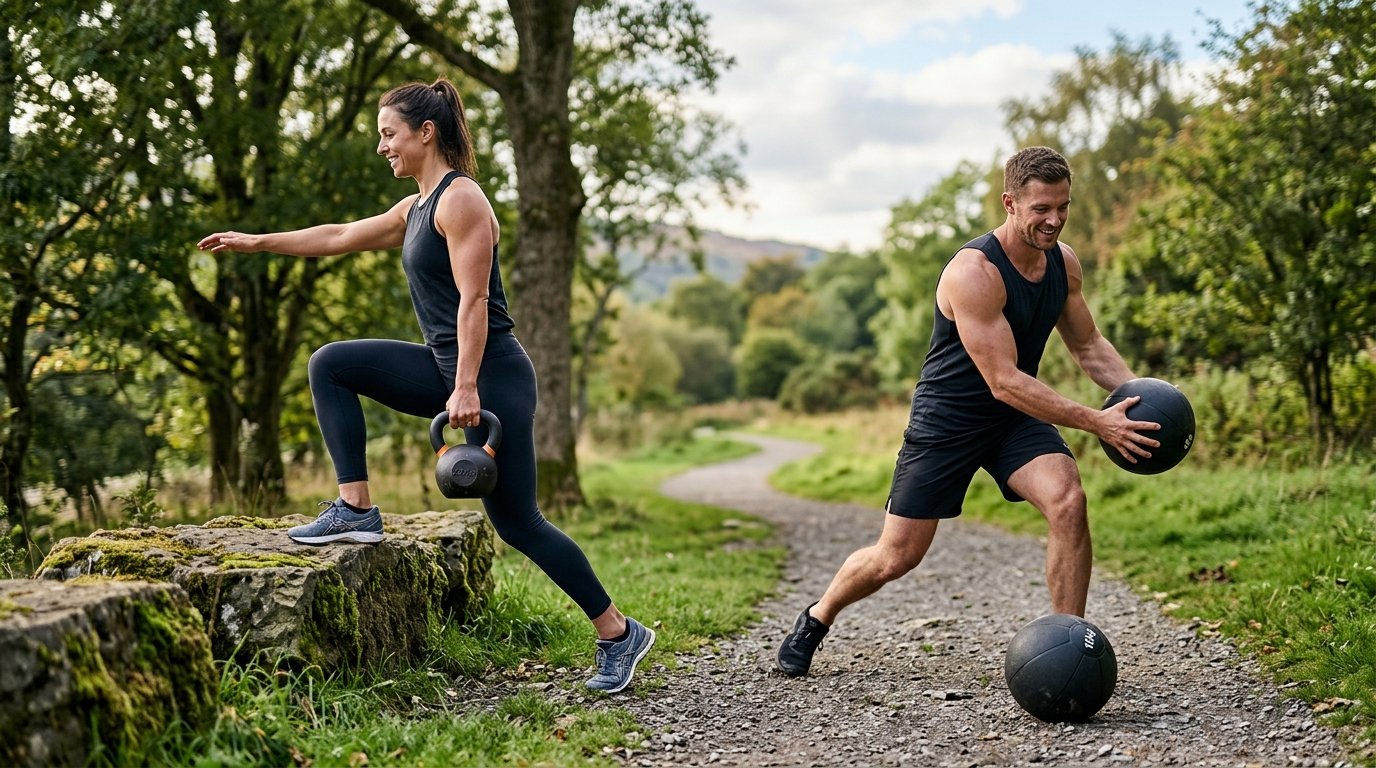
Functional movement patterns represent the foundation of real-world strength that extends far beyond the gym. Unlike isolated exercises that target single muscle groups, functional movements engage multiple joints and muscle groups simultaneously, mimicking the demands of everyday activities. When you lift a heavy grocery bag, climb stairs, or help a friend move furniture, you’re relying on these integrated movement patterns. Exercise science has increasingly validated what our bodies intuitively know: strength means nothing if it doesn’t translate to practical capability. The most impressive bench press means little if you struggle to lift your child or carry luggage through an airport. Functional training bridges this gap by developing strength in movement contexts that matter. This approach doesn’t dismiss traditional strength training; rather, it contextualizes it within real-world application. By understanding and training functional movement patterns, you create a body that’s not just strong in theory but genuinely capable in practice.
The human body operates through fundamental movement patterns that have evolved over millennia. These include pushing, pulling, squatting, hinging, carrying, and rotating movements. Each pattern engages stabilizer muscles, prime movers, and synergists in coordinated sequences. When you perform a squat, for instance, your quadriceps, glutes, hamstrings, core, and even your upper back work together to control your descent and ascent. Research in biomechanics demonstrates that these patterns are neurologically efficient, meaning your nervous system recognizes and optimizes them naturally. This efficiency becomes crucial as you age, since maintaining neural pathways supports longevity and independence. Understanding these six primary patterns provides a framework for designing comprehensive training programs. Rather than randomly selecting exercises, you can strategically choose movements that reinforce these fundamental patterns. This systematic approach ensures balanced development and reduces injury risk. When you train functionally, you’re essentially training your nervous system to coordinate complex movements effectively.
Pushing movements form one of the cornerstones of functional strength and encompass both horizontal and vertical variations. A horizontal push, like a push-up or bench press, develops the chest, shoulders, and triceps while stabilizing the core. Vertical pushing, demonstrated by overhead presses, builds shoulder stability and addresses the demands of reaching overhead in daily life. The beauty of functional pushing lies in its scalability and accessibility. You can progress from wall push-ups to incline variations, standard push-ups, and eventually single-arm push-ups or weighted variations. Each progression demands greater stability and neural recruitment. Functional pushing also teaches your body to maintain spinal alignment under load, a skill that protects your back during real-world activities. When you practice proper pushing mechanics, you strengthen not just the muscles but the movement pattern itself. This pattern reinforces shoulder health by promoting balanced strength around the joint. Incorporating regular pushing variations ensures your anterior chain develops appropriately alongside your posterior chain.
Pulling movements provide the counterbalance to pushing patterns and are often neglected in casual fitness routines. Pulling exercises, including rows and pull-ups, develop the back, biceps, and rear shoulders while strengthening the posterior chain. These movements are essential for posture, especially in our screen-dominated world where forward-hunched positions dominate daily life. Functional pulling patterns teach your body to retract and stabilize your shoulder blades, creating a foundation for healthy shoulders and upper back. Variations range from assisted pull-ups and resistance band rows to advanced movements like muscle-ups. The progression depends on your current strength level and training experience. Research consistently shows that individuals who maintain balanced pushing and pulling strength experience fewer shoulder injuries and better postural alignment. Functionally speaking, pulling strength matters when you need to open heavy doors, climb, or pull yourself up from a fall. By prioritizing pulling movements alongside pushing patterns, you create muscular balance that supports both performance and longevity.
Squatting and hinging patterns represent lower body fundamentals that directly translate to everyday activities like sitting, standing, and picking objects from the ground. A squat involves bending at the hips and knees while maintaining an upright torso, engaging the quads, glutes, hamstrings, and core. Hinging, conversely, prioritizes hip movement while maintaining relatively straight knees, emphasizing the posterior chain and lower back. Both patterns are essential, yet they serve different purposes. Squatting builds leg strength and addresses the demands of climbing stairs or rising from a chair. Hinging teaches proper spinal mechanics for lifting heavy objects safely. Many lower back injuries stem from improper hinging patterns, making this movement pattern critically important. Functional training emphasizes mastering bodyweight variations before adding external load. A perfect bodyweight squat provides enormous benefit, while a poorly executed loaded squat creates injury risk. By developing proficiency in these patterns, you build a movement vocabulary that protects your spine and maximizes lower body strength. These patterns form the basis for advanced movements like deadlifts and front squats.
Carrying movements represent an often-overlooked functional pattern that directly mimics real-world demands. Whether you’re carrying groceries, luggage, or children, your body must stabilize and move while under asymmetrical or symmetrical load. Farmer carries, where you hold weights at your sides and walk, develop grip strength, core stability, and postural endurance. Suitcase carries, involving unilateral load, challenge your obliques and anti-rotation core stability. These movements build practical strength that translates immediately to daily life. Unlike isolated exercises, carrying movements demand full-body integration and develop the stabilizer muscles that support your joints. Research indicates that loaded carries improve bone density, enhance metabolic function, and develop functional core strength superior to traditional ab exercises. The beauty of carrying patterns lies in their simplicity and effectiveness. You can perform them anywhere with minimal equipment, making them accessible for varied fitness levels. Incorporating regular carrying work into your training program builds resilience and practical capability that extends far beyond the gym environment.
Rotational movements, often neglected in traditional strength programs, are essential for functional capability and injury prevention. Your core isn’t just responsible for flexion and extension; it must resist rotation and generate rotational force. Functional rotational patterns include movements like wood chops, Pallof presses, and landmine rotations. These exercises teach your core to stabilize against rotational forces, which matters when you twist to look behind you or rotate to place an object on a shelf. Athletic movements like throwing and swinging inherently involve rotation, making these patterns crucial for sports performance. More importantly, rotational strength protects your spine during everyday movements. Many back injuries occur during seemingly innocent twisting motions because the core lacks adequate rotational stability. By training these patterns, you develop the neural control and muscular endurance needed to protect your spine. Functional rotational training also addresses muscular imbalances that develop from repetitive, unilateral activities. Integrating rotational movements creates a comprehensive training approach that addresses all three planes of motion.
Implementing functional movement patterns into your training requires a systematic approach that balances progression with consistency. Begin by assessing your current proficiency in each fundamental pattern: pushing, pulling, squatting, hinging, carrying, and rotating. Identify your weakest patterns and prioritize addressing them without neglecting your strengths. A well-designed functional training program includes multiple movement patterns in each session, typically featuring one pushing variation, one pulling variation, one lower body pattern, and one loaded carry or rotational movement. This balanced approach ensures comprehensive development while maintaining efficiency. Start with bodyweight or light loads to master movement quality before progressing intensity. Remember that functional strength develops gradually through consistent practice rather than dramatic intensity spikes. Track your progress not just through weight lifted but through movement quality and real-world capability. Over time, you’ll notice improved performance in daily activities, better posture, reduced pain, and enhanced confidence in your body’s capabilities. This practical strength becomes the foundation for a healthy, capable body throughout your lifetime.