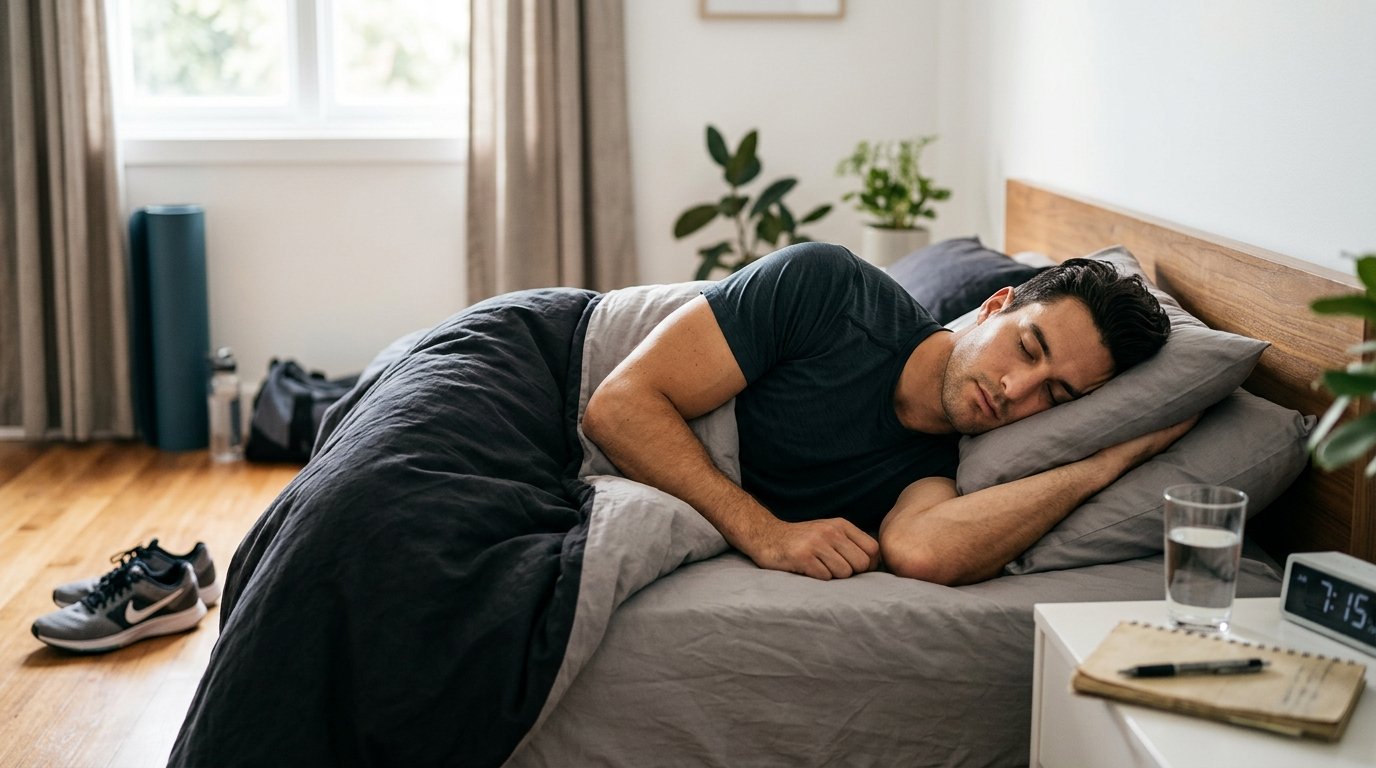
Sleep is not a luxury for athletes—it’s a fundamental pillar of recovery that rivals nutrition and training in importance. During sleep, your body undergoes critical physiological processes that directly enhance athletic performance and adaptation. When you drift into deeper sleep stages, your nervous system shifts into parasympathetic dominance, allowing heart rate to decrease and stress hormones like cortisol to normalize. This restorative state enables your muscles to repair micro-tears created during intense exercise, a process essential for building strength and endurance. Growth hormone secretion peaks during deep sleep, facilitating muscle protein synthesis and bone density improvements. Without adequate sleep, these recovery mechanisms stall, leaving you in a perpetual state of incomplete adaptation. Understanding this connection transforms how you approach your training program, revealing that rest days and sleep quality deserve the same dedication you give to your workout sessions. Athletes who prioritize sleep consistently outperform their sleep-deprived counterparts in strength tests, speed metrics, and endurance benchmarks.
The relationship between sleep architecture and recovery is more nuanced than simply logging eight hours. Your sleep consists of distinct stages—light sleep, deep sleep, and REM sleep—each serving unique recovery functions. Light sleep helps consolidate memories and regulate body temperature, while deep sleep is where the most significant physical restoration occurs. During deep sleep, blood flow to muscles increases, facilitating nutrient delivery and waste product removal. REM sleep supports cognitive recovery, emotional regulation, and memory consolidation of motor skills learned during training. Most athletes need 7-9 hours nightly, but individual requirements vary based on training intensity, age, and genetics. A 60-minute high-intensity training session may demand an extra 30-60 minutes of sleep compared to lighter activity days. Tracking your sleep stages through wearable devices provides valuable data about your recovery quality, helping you identify whether you’re achieving sufficient deep sleep or spending too much time in lighter stages. This personalized approach to sleep optimization can be the differentiator between stagnation and progress.
Circadian rhythm disruption represents one of the most underestimated obstacles to athletic recovery in modern life. Your body operates on a roughly 24-hour biological clock that regulates sleep-wake cycles, hormone production, and metabolic processes. When you maintain consistent sleep and wake times, your circadian rhythm synchronizes with environmental light cues, optimizing melatonin production and cortisol patterns. This alignment enhances sleep quality and accelerates recovery. However, irregular schedules, late-night training sessions, and excessive artificial light exposure can desynchronize your circadian rhythm, fragmenting sleep and reducing deep sleep duration. Athletes who travel across time zones face particular challenges, as their internal clock falls out of sync with local daylight. The consequences include delayed sleep onset, frequent awakenings, and reduced sleep efficiency. Establishing a stable sleep schedule, even on weekends, helps anchor your circadian rhythm. Exposure to bright light in the morning and darkness in the evening further reinforces this biological timing. Prioritizing circadian alignment alongside sleep duration creates a synergistic effect that dramatically improves recovery outcomes.
Sleep deprivation impairs athletic performance through multiple interconnected mechanisms that extend far beyond simple fatigue. When sleep is insufficient, your reaction time slows, decision-making deteriorates, and motor coordination declines—effects particularly detrimental in sports requiring precision and quick responses. Your immune system becomes compromised, increasing susceptibility to upper respiratory infections and other illnesses that sideline training. Inflammation markers rise throughout your body, potentially exacerbating exercise-induced inflammation rather than facilitating the controlled inflammatory response necessary for adaptation. Metabolic dysfunction follows sleep loss, increasing insulin resistance and promoting fat storage while preserving muscle breakdown—the opposite of what athletes desire. Motivation and perceived exertion also suffer; activities feel harder when you’re sleep-deprived, causing you to either reduce training intensity or push through at elevated injury risk. Cognitive recovery slows, making it difficult to learn new movement patterns or strategies. Perhaps most concerning, sleep deprivation impairs injury healing and increases injury risk during training. The cumulative effect of chronic sleep loss creates a performance ceiling that no amount of additional training can overcome.
Environmental factors dramatically influence sleep quality and deserve deliberate attention in your recovery protocol. Temperature is critical; your core body temperature must drop slightly to initiate sleep, and maintaining a cool sleeping environment around 60-67°F (15-19°C) facilitates this process. Darkness triggers melatonin production, so blackout curtains or sleep masks help optimize this hormonal response. Noise disruption fragments sleep architecture, reducing deep sleep duration even if total sleep time remains unchanged. Consider white noise machines or earplugs if environmental noise is unavoidable. Mattress and pillow quality directly affect sleep comfort and spinal alignment, particularly important for athletes whose bodies endure significant mechanical stress. Humidity levels between 30-50% support respiratory comfort without promoting dust mites or mold growth. Blue light from phones, tablets, and screens suppresses melatonin production, so implementing a screen-free period 60-90 minutes before bed significantly improves sleep onset. Your bedroom should be reserved primarily for sleep, avoiding work or intense mental activity that activates your sympathetic nervous system. Creating an optimized sleep environment removes barriers to deep, restorative sleep.
Pre-sleep routines and behavioral practices create the physiological conditions necessary for rapid sleep onset and sustained deep sleep. A consistent wind-down routine signals your body that sleep is approaching, allowing gradual nervous system downregulation. Dim lighting, reduced stimulation, and calming activities like reading or gentle stretching activate your parasympathetic nervous system. Avoiding caffeine after 2 PM prevents adenosine receptor blockade that would otherwise promote sleepiness. Large meals close to bedtime can cause discomfort and sleep fragmentation, though light snacks containing complex carbohydrates and protein may actually facilitate sleep by supporting stable blood glucose. Alcohol appears to aid sleep onset but significantly disrupts sleep architecture, reducing deep sleep and REM sleep while increasing nighttime awakenings. Intense exercise within 3-4 hours of bedtime elevates core temperature and arousal, making sleep difficult; scheduling workouts earlier in the day better supports sleep quality. A warm bath or shower 90 minutes before bed triggers the subsequent core temperature drop that facilitates sleep onset. Meditation or breathing exercises calm racing thoughts and lower heart rate. These behavioral interventions cost nothing yet produce measurable improvements in sleep quality and recovery.
Nutritional support for sleep quality often receives less attention than pre-workout nutrition, yet it’s equally important for recovery. Certain nutrients directly influence neurotransmitters and hormones governing sleep. Magnesium supports GABA production and nervous system relaxation; deficiency is associated with insomnia and restless sleep. Tryptophan, an amino acid precursor to serotonin and melatonin, becomes more bioavailable when consumed with carbohydrates that increase insulin levels. Glycine, an inhibitory neurotransmitter, promotes sleep quality and may improve next-day athletic performance. B vitamins regulate neurotransmitter synthesis and circadian rhythm function. Calcium works synergistically with tryptophan to facilitate melatonin production. Rather than relying on supplements, obtaining these nutrients from whole foods provides superior bioavailability and additional micronutrients. Tart cherry juice contains natural melatonin and has demonstrated sleep-improving effects in research. Greek yogurt combines protein and carbohydrates while providing calcium and tryptophan. Nuts and seeds offer magnesium and tryptophan. Timing matters too; consuming sleep-supporting nutrients 1-2 hours before bed allows adequate digestion while supporting melatonin production. This nutritional approach complements behavioral and environmental strategies.
Monitoring and optimizing your individual sleep-recovery relationship transforms it from vague guidance into actionable strategy. Wearable devices tracking sleep duration, sleep stages, and heart rate variability provide objective data about your recovery quality. Heart rate variability particularly indicates nervous system recovery status; higher HRV generally correlates with better recovery and readiness for intense training. Subjective measures matter too; tracking how rested you feel, your mood, and training performance helps correlate sleep quality with outcomes. Most athletes benefit from maintaining a simple sleep log noting bedtime, wake time, perceived sleep quality, and next-day performance metrics. This data reveals patterns—perhaps you notice that when you achieve 8+ hours of sleep with sufficient deep sleep, your strength metrics improve measurably. You might discover that training performance suffers when HRV drops below your personal baseline. These individual insights allow you to make evidence-based decisions about sleep prioritization. During heavy training blocks, you may deliberately increase sleep duration knowing it will enhance adaptation. During lighter phases, standard sleep recommendations suffice. This personalized, data-driven approach to sleep optimization represents the future of athletic recovery, transforming sleep from an afterthought into a strategic competitive advantage that complements your training program perfectly.