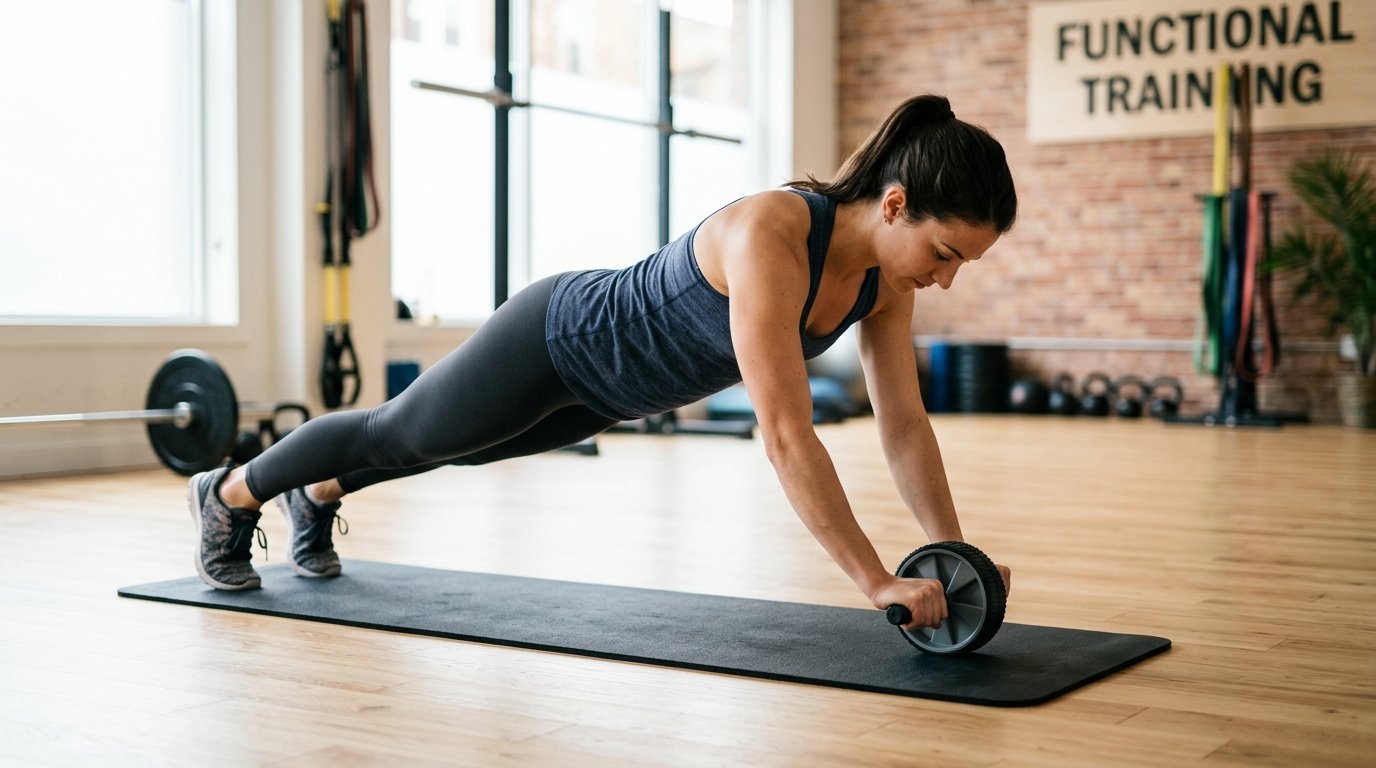
Core stability represents one of the most misunderstood concepts in modern fitness training. Many people equate core strength with visible abdominal muscles, but true core stability involves the deep stabilizing muscles that support your spine and transfer force between your upper and lower body. These muscles, including the transverse abdominis, multifidus, diaphragm, and pelvic floor, work synergistically to maintain proper alignment during movement. When your core is stable, your body can move more efficiently, reducing compensatory patterns that lead to injury. Research in exercise science consistently demonstrates that individuals with strong core stability experience fewer lower back issues, improved athletic performance, and better posture throughout their daily activities. Understanding this distinction is crucial because it shifts your training focus from vanity-driven exercises to functional movements that genuinely enhance your movement quality and longevity.
The foundation of effective core stability training begins with understanding how your core functions during movement. Unlike isolated abdominal exercises, functional core work emphasizes co-contraction of multiple muscle groups working together to stabilize your spine. When you perform a deadlift, throw a ball, or simply walk, your core isn’t contracting maximally; instead, it’s providing just enough tension to maintain spinal neutrality while allowing movement to occur. This concept, known as motor control, is essential for developing genuine stability rather than just muscular strength. Many athletes and fitness enthusiasts neglect this nuanced understanding, leading them to perform endless planks and crunches while their movement patterns remain dysfunctional. By training your core to stabilize dynamically, you create a foundation that translates directly to improved performance in sports, weightlifting, and everyday activities. This functional approach represents a paradigm shift from traditional core training methodology.
Dead bugs stand as one of the most effective yet underutilized core stability exercises available to fitness enthusiasts. This exercise involves lying on your back with your arms extended toward the ceiling and your knees bent at ninety degrees. From this position, you slowly lower your opposite arm and leg while maintaining contact with the floor, then return to the starting position before alternating sides. The beauty of dead bugs lies in their ability to teach core stability while the spine remains in a relatively safe neutral position. This exercise forces your deep core muscles to work isometrically to prevent your lower back from arching, which is precisely the stability pattern you need during many functional movements. Beginners should focus on controlled, slow movements rather than speed, allowing their nervous system to develop the proprioceptive awareness necessary for proper motor control. Dead bugs serve as an excellent foundational exercise before progressing to more challenging core variations.
Bird dogs represent another fundamental core stability exercise that deserves a prominent place in your training routine. This exercise involves starting on your hands and knees, then extending your opposite arm and leg simultaneously while maintaining a neutral spine. The key to maximizing bird dog benefits involves moving slowly and deliberately, resisting the urge to rotate your torso or hike your hips toward one side. Your core must work intensely to prevent these compensatory movements while your limbs extend away from your body’s center of gravity. Bird dogs particularly benefit individuals who spend extended periods sitting, as they activate the gluteus maximus and reinforce proper hip extension patterns. Unlike many core exercises that isolate the abdominals, bird dogs integrate your posterior chain, creating a more comprehensive stability pattern. Progression involves adding brief holds at full extension or incorporating resistance bands, allowing you to continuously challenge your stabilizing muscles.
Pallof presses exemplify anti-rotation core exercises, which represent a critical but often neglected component of comprehensive core training. This exercise involves standing perpendicular to a cable machine with the handle positioned at chest height, then pressing the handle straight ahead while resisting rotational forces generated by the cable tension. Your core must contract intensely to prevent your torso from rotating toward the cable, thereby developing stability in a plane of motion that directly translates to real-world activities. Many sports and daily movements involve resisting rotational forces rather than creating them, making anti-rotation exercises functionally superior to traditional twisting movements. Pallof presses develop not only core stability but also teach your nervous system to maintain neutral spine positioning under asymmetrical loading. This exercise proves particularly valuable for athletes in rotational sports like baseball, tennis, and golf, as it builds the stability foundation necessary for powerful, injury-free performance. Incorporating anti-rotation exercises fundamentally improves your overall movement quality.
Suitcase carries represent an underrated core stability exercise that builds functional strength while remaining accessible to fitness enthusiasts of all levels. This exercise simply involves picking up a heavy dumbbell or kettlebell in one hand and walking a predetermined distance while maintaining an upright posture and neutral spine. The asymmetrical loading creates significant anti-lateral flexion demands on your core, forcing your stabilizing muscles to work intensely to prevent your torso from leaning toward the weighted side. Unlike isolated core exercises performed on the floor, suitcase carries develop stability under real-world conditions where you must move through space while maintaining proper positioning. This exercise particularly benefits individuals preparing for functional fitness competitions or those seeking practical strength applicable to everyday tasks. Suitcase carries also improve grip strength and shoulder stability as secondary benefits. The simplicity of this exercise belies its profound effectiveness for developing genuine core stability in a functional context.
Integrating core stability exercises into your existing training program requires strategic planning rather than simply adding random exercises to your routine. Most fitness enthusiasts benefit from performing one to two core stability exercises at the beginning of their training session, when their nervous system is fresh and capable of learning proper motor patterns. Rather than performing high repetitions, focus on moderate repetitions with perfect form, emphasizing the quality of movement over quantity. This approach ensures that your nervous system develops the proprioceptive awareness necessary for genuine stability improvements. Many people make the mistake of treating core work as a finisher, performing it when fatigued, which leads to compensatory patterns and reinforces poor movement quality. Strategic programming involves selecting exercises that address your specific movement deficiencies or sport-specific demands. For example, rotational athletes benefit from emphasizing anti-rotation exercises, while powerlifters might prioritize isometric stability variations.
Progressive overload in core stability training differs significantly from traditional strength training approaches, requiring patience and attention to movement quality rather than simply adding weight. Initial progression involves mastering perfect form with bodyweight before adding external resistance or increasing exercise difficulty. Once you’ve established proper motor control, you can progress by increasing the duration of holds, adding external resistance through bands or cables, or transitioning to more challenging variations that require greater stability. Some of the most effective progressions involve changing the stability of your training surface, such as performing exercises on unstable surfaces, though research suggests this approach provides modest benefits beyond properly programmed stable-surface training. The key to long-term core stability development involves viewing it as an ongoing process rather than a destination, continuously refining your movement patterns and challenging your stabilizing muscles in novel ways. This patient, progressive approach ultimately yields superior results compared to haphazard training methods.