Proprioception, often called your sixth sense, represents your body’s remarkable ability to perceive its position and movement in space without relying on visual feedback. This sensory system operates through specialized receptors called mechanoreceptors located in your muscles, tendons, joints, and ligaments. These receptors constantly communicate with your central nervous system, providing real-time information about where your body parts are positioned relative to one another and how they’re moving. Understanding proprioception is fundamental to athletic performance and everyday functionality. Whether you’re reaching for a coffee cup, walking down stairs, or executing a complex athletic movement, proprioception works silently in the background. Most people never consciously think about this system until it fails them, resulting in a twisted ankle or poor balance. By deliberately training your proprioceptive system through targeted exercises, you can significantly enhance your body awareness, reduce injury risk, and improve your overall movement quality. This foundational knowledge sets the stage for understanding why proprioceptive training deserves a prominent place in your fitness routine.
The science behind proprioceptive training reveals fascinating neurological adaptations that occur when you challenge your balance and coordination systems. When you perform proprioceptive exercises, you’re essentially creating an environment where your nervous system must work harder to maintain stability and control. This increased demand triggers neural adaptations that strengthen the communication pathways between your sensory receptors and your brain. Over time, these repeated neural patterns become more efficient, allowing your body to respond faster and more accurately to balance challenges. Research demonstrates that proprioceptive training activates multiple areas of your brain, including the cerebellum, which plays a crucial role in coordination and motor learning. The beauty of this adaptation process is that it’s progressive; as your nervous system becomes more efficient, you can gradually increase the difficulty of your exercises to continue challenging your system. These neurological improvements extend far beyond the gym, enhancing your ability to navigate uneven terrain, react quickly to unexpected movements, and maintain stability during dynamic activities. The brain’s plasticity ensures that with consistent training, proprioceptive improvements can become permanent enhancements to your movement capabilities.
Balance training forms the cornerstone of proprioceptive development, and the progressions available are remarkably diverse and adaptable to any fitness level. Beginning with simple single-leg stance exercises allows you to establish a baseline for your balance capabilities while building foundational proprioceptive awareness. As your confidence and stability improve, you can progress to more challenging variations such as standing on unstable surfaces like foam pads, balance boards, or stability balls. These unstable environments force your proprioceptive system to work overtime, recruiting stabilizer muscles and enhancing neural feedback mechanisms. Adding dynamic movements to your balance work, such as reaching exercises or controlled rotations while standing on one leg, further challenges your system and increases the complexity of the motor control required. The progression from static to dynamic balance training mirrors how your nervous system learns and adapts, moving from simple stabilization tasks to more sophisticated movement patterns. By systematically progressing your balance training, you ensure continuous improvement and prevent plateaus that can occur when exercises become too familiar. This structured approach to balance training creates a sustainable framework for long-term proprioceptive development.
Coordination exercises represent another essential dimension of proprioceptive training, focusing on how different body parts work together in synchronized patterns. Cross-body coordination drills, where opposite limbs move in coordinated patterns, challenge your nervous system to manage complex motor sequences. Exercises like cross-crawl movements, where you touch your right elbow to your left knee while standing, activate both hemispheres of your brain and enhance interhemispheric communication. Ladder drills, agility cone exercises, and footwork patterns used in sports training all develop coordination by requiring precise timing and spatial awareness. These exercises become particularly valuable because they translate directly to improved athletic performance and reduced injury risk during sport-specific movements. The cognitive demand of coordination training also provides a secondary benefit, as focusing on complex movement patterns engages your attention and can improve overall neuromuscular control. Incorporating varied coordination exercises prevents adaptation and maintains the challenge to your nervous system. By combining balance and coordination training, you create a comprehensive proprioceptive program that addresses multiple aspects of sensorimotor function and movement quality.
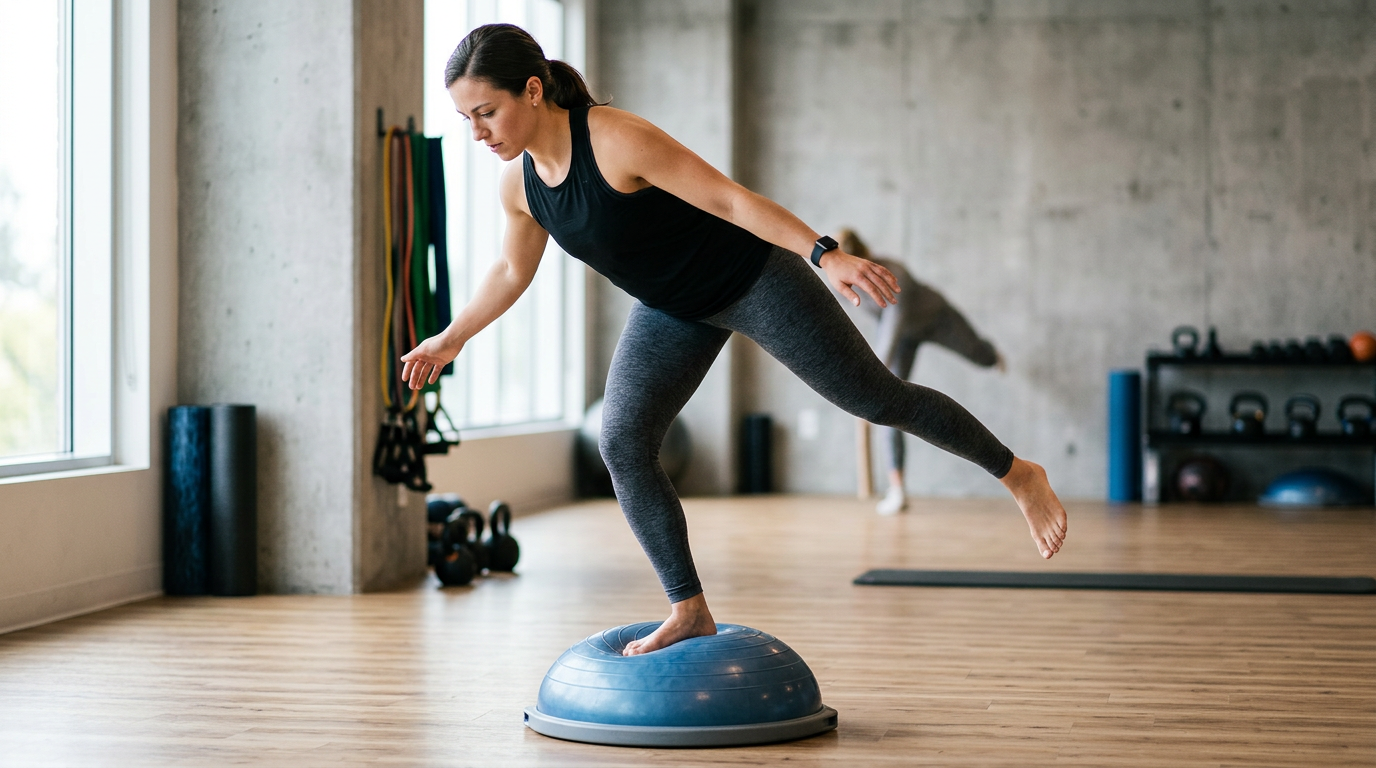
Unstable surface training has become increasingly popular in fitness facilities, and for good reason: these tools provide an excellent stimulus for proprioceptive development. Foam rollers, balance boards, BOSU balls, and stability balls create an environment where your body must constantly make micro-adjustments to maintain equilibrium. This constant adjustment process dramatically increases the demand on your proprioceptive system compared to stable surface training. When you perform traditional exercises like squats or push-ups on unstable surfaces, you’re simultaneously training strength and proprioception, creating a more efficient workout. However, it’s important to note that unstable surface training should be progressive; beginning with too much instability can compromise exercise form and reduce the effectiveness of strength training. The key is finding the balance between creating enough challenge to stimulate proprioceptive adaptation without sacrificing movement quality or safety. Research shows that combining unstable surface training with stable surface training yields superior results compared to either approach alone. This complementary training strategy ensures you develop both the strength foundation and the proprioceptive refinement necessary for optimal movement control.
Eye closure and visual deprivation techniques represent a powerful but often underutilized approach to proprioceptive training. By removing visual input, you force your proprioceptive system to work harder and rely more heavily on mechanoreceptor feedback. Starting with simple exercises like standing on one leg with eyes closed, you can gradually progress to more complex movements performed without visual guidance. This approach reveals how much your balance typically relies on visual compensation, and training without vision helps develop true proprioceptive competence. Many athletes find that vision-challenged training significantly improves their performance in sports where visual distractions occur or where lighting conditions vary. The nervous system adapts remarkably well to this challenge, and many people report noticeable improvements in balance and coordination within just a few weeks of consistent vision-challenged training. This technique also provides valuable diagnostic information; if your balance deteriorates dramatically with eyes closed, it indicates an over-reliance on visual input that proprioceptive training can address. Incorporating brief periods of vision-challenged training into your routine offers a high-reward, low-cost method for enhancing proprioceptive development.
Rotational and vestibular training targets the inner ear and vestibular system, which work closely with proprioception to maintain balance and spatial orientation. Rotational movements, controlled spins, and head position changes stimulate the vestibular apparatus, enhancing your body’s ability to maintain equilibrium during dynamic activities. Exercises that combine rotation with balance challenges, such as rotating your torso while standing on one leg, create a comprehensive stimulus for both systems. The vestibular system becomes particularly important during activities involving rapid direction changes, head movements, or complex three-dimensional motion. Training this system improves your ability to maintain balance during athletic movements and reduces dizziness or disorientation during dynamic activities. Incorporating gentle rotational movements into your warm-up and including more challenging rotational exercises in your main training session ensures comprehensive vestibular and proprioceptive development. The integration of vestibular training with traditional proprioceptive work creates a more complete approach to balance and coordination enhancement. This multi-system approach recognizes that balance and coordination result from the integrated function of multiple sensory and motor systems working in concert.
Implementing a consistent proprioceptive training program yields benefits that extend far beyond improved balance and coordination. Athletes report enhanced body awareness, better movement efficiency, and reduced injury rates when proprioceptive training becomes a regular component of their training regimen. Older adults benefit tremendously from proprioceptive training, as balance and coordination naturally decline with age, and targeted training can significantly slow or reverse this decline. The functional improvements translate to daily life, making everyday activities safer and more confident. Starting a proprioceptive training program requires minimal equipment and can be performed almost anywhere, making it highly accessible for most individuals. A reasonable approach involves dedicating ten to fifteen minutes several times per week to proprioceptive exercises, progressively increasing difficulty as your abilities improve. Combining proprioceptive training with your existing strength and conditioning program creates a more comprehensive approach to fitness that addresses all dimensions of movement quality. By prioritizing proprioceptive development, you invest in your long-term movement health, athletic performance, and overall quality of life.